Main Theme
Sub-theme: water management; circular systems; resources; climate change; education; global cooperation
Abstract
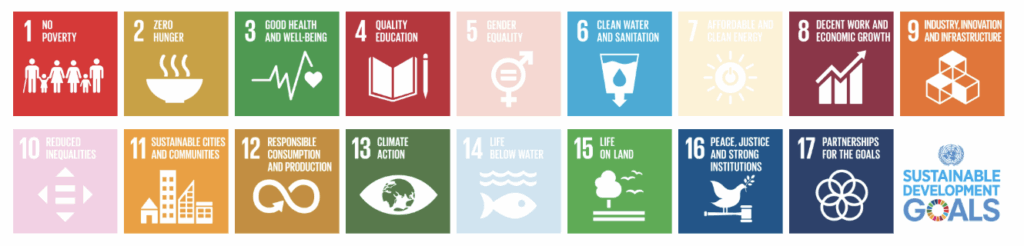
In September 2023, the FAO sounded a global alarm, revealing that 735 million people suffer from hunger while 13% of food is lost in the distribution chain, and an additional 17% is wasted at the household level. Global hunger increased by 1.4%, impacting 22.7% of the population in 58 countries, with conflicts being the primary cause in 27 nations. The FAO underscores the unsustainable nature of agri-food systems, necessitating urgent action to align with the UN’s Agenda 2030 Sustainable Development Goal (SDG) 12 to halve global food waste.
Small to medium-scale institutions, particularly cities, play a pivotal role in transitioning to sustainable food and agricultural systems. Milan, aspiring to exemplify good food policies, initiated the Milan Food Policy even before Expo 2015, a World Expo hosted by Milan in 2015 themed “Feeding the Planet. Energy for Life.” This model focuses on fighting food waste, providing access to healthy food, creating sustainable food systems, promoting food education and research. Key initiatives include neighborhood hubs against food waste and educational programs in schools. These hubs, involving supermarkets, local shops, and volunteers, collect and redistribute food surplus, receiving international recognition such as the Earthshot Prize in 2021.
The Milan Food Policy prioritizes education in schools. Milano Ristorazione (Milan Catering), a municipal entity, prepares 85,000 daily meals with an emphasis on healthy eating. Initiatives like removing salt from nursery school meals and promoting plant-based proteins reduce CO2 emissions. Educational Gardens connect schools with sustainability, and urban agriculture is promoted to reconnect local productions with consumption.
The Milan Urban Food Policy Pact, stemming from Milan Expo 2015, now includes over 270 global cities. Aiming for sustainable, inclusive, and diverse food systems, it outlines a Framework for Action with 37 recommended actions across governance, sustainable diets, social and economic justice, food production, distribution, and waste, with specific indicators to monitor progress for each action.
Sustainable Development Goals Chart
Main Highlights
Problem:
- Approximately 735 million people worldwide suffer from hunger;
- Globally, 13% of food is lost in the distribution chain, from post-harvest to retail pre-sale;
- An additional 17% of food is wasted at the household level.
Context:
- Even before theWorld Expo, Expo 2015, the city of Milan embarked on a journey to become a recognized example of good policies and reflections on the subject of food.
Solution:
- During Expo 2015, the local Milan Food Policy was established, and the Milan Urban Food Policy Pact was promoted.
Impact Statement:
- In 2023, over 615 tons of food recovered;
- Companies donating food receive up to a 50% reduction in waste disposal fees;
- Changes in school menus favoring plant-based proteins led to a 42.89% reduction in equivalent CO2 emissions from 2015 to 2021.
Systems Perspective:
- Milan Food Policy bounces between local and global dimensions, which is crucial to consider the needs and requirements of agricultural and food systems, consequently affecting their environmental, social, and economic impacts.
Case Overview
The FAO (Food and Agriculture Organization of the United Nations) sounded the alarm in September 2023 on the occasion of the International Day of Awareness on Food Waste: approximately 735 million people worldwide suffer from hunger. Yet, globally, 13% of food is lost in the distribution chain, from post-harvest to retail pre-sale, and an additional 17% of food is wasted at the household level.
The issue of global hunger is colossal. In just one year, those affected by severe food insecurity increased from 21.3% in 2021 to 22.7% in 2022, a 1.4% rise. The problem spans 58 countries, compared to 53 in 2021, with a further increase for the fourth consecutive year. In these areas facing a food crisis, over 35 million children under the age of five years old have experienced malnutrition. The ten major food crises of 2022, involving 163 million people, representing 63% of the total global population, are, in order of magnitude, in the Democratic Republic of the Congo, Ethiopia, Afghanistan, Nigeria, Yemen, Myanmar, Syrian Arab Republic, Sudan, Ukraine, and Pakistan. Even in 2022, conflicts remained the primary cause of food crises, surpassed, however, in 27 countries by economic shocks affecting 83.9 million people. A few months after the FAO report, with the outbreak of the war in the Middle East, we can also add the food crisis affecting the Palestinians.
The FAO also highlights that many of the world’s agri-food systems are unsustainable, degrading agricultural lands, contributing to greenhouse gas emissions and biodiversity loss, and depleting groundwater. Therefore, according to the United Nations agency for food and agriculture, reducing food losses and waste, besides being a crucial climate strategy leading to a reduction in greenhouse gas emissions, can play a key role in transforming agri-food systems. It leads to increased food availability, contributes to food security, promotes healthy diets, and builds resilience. Moreover, the 2030 Agenda for Sustainable Development aims to halve the per capita global food waste at distribution and consumption levels and reduce food losses along production and supply chains. Action must be taken urgently, and policies rethinking food systems must be implemented.
As with everything related to the world system we live in, it is necessary to observe phenomena from both local and global perspectives. We live in a system that prioritizes economic convenience, moving goods and commodities on a large scale, relying on unsustainable energy sources, and offloading negative externalities on the environment and those with less power. We must acknowledge this system and simultaneously reimagine a sustainable food and agricultural system. The role of small to medium-scale institutions, such as cities or metropolises, is crucial since most people worldwide live in cities today—a trend expected to grow in the future.
Moreover, through the lens of food, much of a city’s life can be narrated. This is because food becomes a part of the daily lives of all its inhabitants, from those who produce it, to those who trade it, to those who consume it. The procurement of healthy food and clean water will become crucial in cities grappling with the consequences of the climate crisis and experiencing rapid growth (it is estimated that by 2050, two-thirds of the world’s population will live in urban areas). For this reason, several cities are choosing to adopt an urban food policy, encompassing a series of policies, actions, and public programs related to these issues.
Even before the World Expo, Expo 2015, the city of Milan embarked on a journey to become a recognized example of good policies and reflections on the subject of food. As a result of Expo 2015, the local Milan Food Policy was established, and the Milan Urban Food Policy Pact was promoted.
Milan Food Policy and Milan Urban Food Policy Pact logos. All below images in this Case come from Milano Food Policy and Milan Urban Food Policy Pact’s website.
Milan Food Policy
What are the objectives of this policy? The objectives are connected to a 5-priority framework: to fight against food waste, provide access to healthy food and water for low-income people, create a sustainable food system by developing the consumption of agricultural products in the peri-urban area, promote food education, and support scientific research in the agrifood sectors.
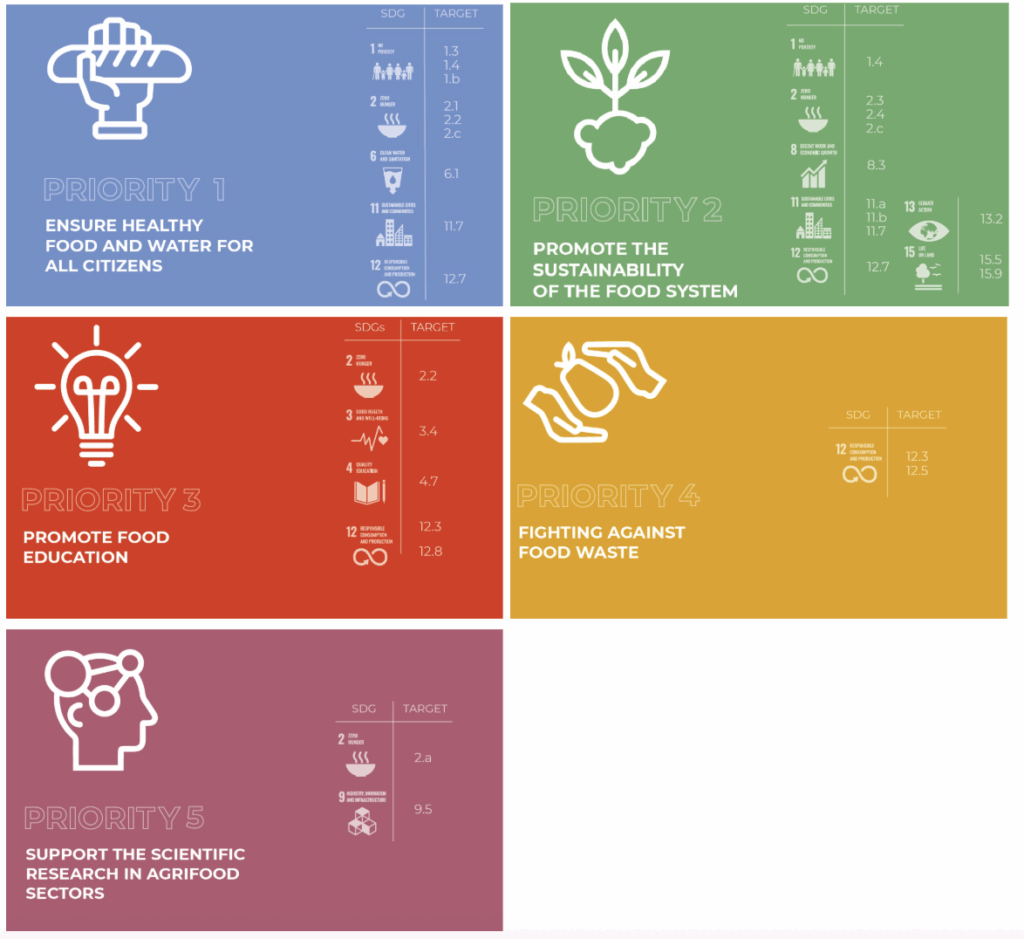
To achieve these objectives, a series of actions are implemented. In this work, we will focus primarily on two of these: neighborhood hubs against food waste and educational programs in schools.
One of the flagship projects of the Milan Food Policy is the creation of neighborhood hubs for the rapid redistribution of food surpluses – local recovery micro-districts. Every morning, volunteers from the Banco Alimentare association collect excesses from affiliated markets and supermarkets and transport them to the hub. Here, recipient non-profit organizations (ONLUS) can use their own means to pick up the food they need. In the afternoon, Rete Banco Alimentare (Food Bank Network) volunteers collect excess food from partner company canteens and personally deliver them to ONLUS with dining facilities. It is a team effort that necessarily requires synergy among many stakeholders.
For example, the quantity of food surplus from a supermarket is variable and often single-category: only one type of product is available each day. The neighborhood hub system solves this problem by consolidating surplus pickups from multiple supermarkets in one location. In this way, ONLUS can select a nutritionally balanced mix. The centralized network is a solution for limited logistical resources and deficiencies in the processes that characterize many ONLUS organizations. Thirdly, the neighborhood hub, in addition to supermarkets, allows for the involvement of local shops, strengthening community ties.
Different actors operating at various levels collaborate in an open and flexible system with participatory governance and continuous monitoring to avoid disruptions and learn from mistakes. Every euro invested in the recovery chain enables providing food to the needy worth up to 10 times more. During the Covid-19 pandemic, which temporarily halted the first hub, the municipality organized 10 temporary and mobile hubs to address the increasing number of people in need. During the emergency, relationships with both profit and non-profit entities intensified, and in the tragedy, a spirit of solidarity and interest in the project emerged from many companies that then remained part of the initiative.
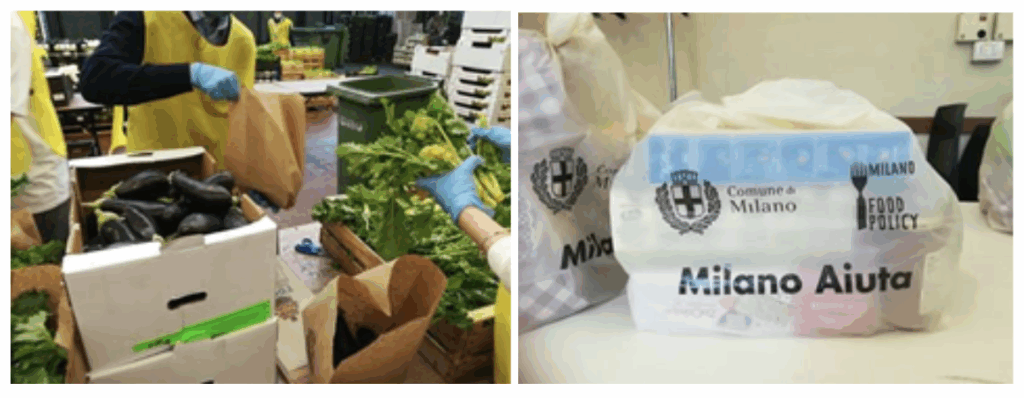
In 2021, with the project of the Neighborhood Hub Food Policy against food waste, Milan won the first edition of the international Earthshot Prize for the best solutions to protect the environment. The one-million-pound prize was used to further enhance these hubs, open new ones, ensure their long-term sustainability, and replicate this good practice in the network of cities working with Milan on food policies, starting from the C40 cities network and the Milan Urban Food Policy Pact.
In 2023 alone, over 615 tons of food were recovered, including 574 tons from the five currently active neighborhood hubs in Milan, supplemented by 41 tons from open-air markets. Hundreds of thousands of excess items were redistributed to approximately 27,000 vulnerable individuals, equivalent to about 1,230,000 meals. By 2024, the Municipality plans to open three new neighborhood hubs against food waste, in addition to the existing five, and further involve municipal markets, aiming to collect about 200 kg of fresh food surplus daily from 20 city markets. Finally, as an incentive, companies deciding to donate their food surplus receive a reduction of up to 50% on waste disposal fees. Potential donors can be shops, bars, supermarkets, laboratories, restaurants, and market stalls, totaling over 10,000 activities in the city.
The Milan Food Policy is managed by the deputy mayor and the education assessor. Why is that? Because at the core of the food policy is education in schools, aiming to strengthen not only the connection with the land but also with those who work and produce food. For Italy, Milan is a fairly large city (1.4 million inhabitants). A city of this size is also capable of influencing food education through concrete choices when it comes to public purchases. The publicly-owned company “Milano Ristorazione,” managed by the Municipality, prepares 85,000 meals every day, including those for schools, day centers, and elderly residences. Part of the mission is to educate about healthy eating and prevent various types of malnutrition typical of urban areas, leading to obesity and cardiovascular diseases.
For example, the Municipality has chosen to remove salt from the cooking water for meals in nursery schools: 8,000 children are getting used to a different level of saltiness, potentially using less salt in the future. Not only that: from 2015 to 2021, thanks to changes in school menus, favoring plant-based proteins, Milan has calculated a 42.89% reduction in equivalent CO2 emissions. With the “Mid-Morning Fruit” program, healthy eating habits are promoted among elementary school children. The goal is to structurally replace the snacks purchased by families and habitually consumed by children at school. The administration of organic fruit is moved to mid-morning, anticipating the fruit typically provided at the end of lunch at school, which is generally left unconsumed and thus wasted.
Furthermore, with the Educational Gardens project, the Municipality promotes and facilitates the creation, coordination, and development of gardens within the city’s schools, fostering long-term sustainability and connecting schools with the social fabric in which they are embedded.
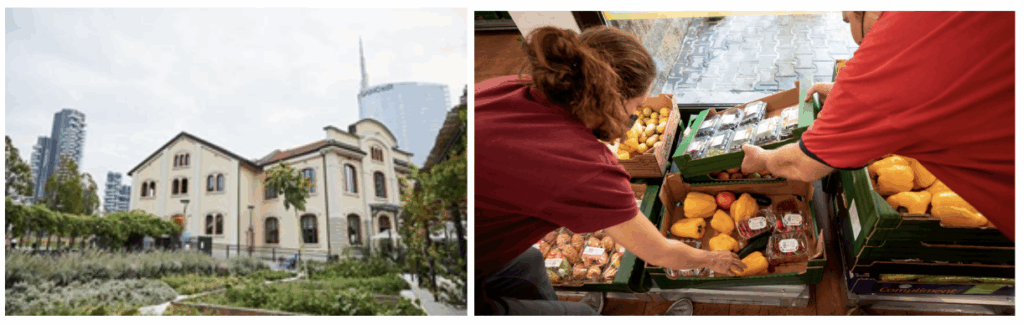
In addition to these primary actions, the Food Policy works to promote urban and peri-urban agriculture. Milan is the second-largest agricultural city in Italy, and the project aims to reconnect local productions to local consumption through public-private agreements, highlighting products in the city’s canteens, as demonstrated by the pilot project on local rice supplies.
Milan Urban Food Policy Pact

The pact, born as a legacy of Expo Milan 2015, was originally signed by 100 global cities. Today, it boasts over 270 participating cities worldwide, including four in Japan (Tokyo, Osaka, Kyoto, and Toyama). This pact serves as a concrete tool that mayors or their delegates use to engage and exchange best practices on various aspects, ranging from food distribution to combating food waste.
The goal is to develop sustainable food systems that are inclusive, resilient, safe, and diverse, providing healthy and affordable food to all people within a human rights-based framework. The aim is also to minimize waste, conserve biodiversity, and adapt to and mitigate the impacts of climate change. It encompasses a Framework for Action, listing 37 recommended actions clustered in six categories:
- Governance: Through actions such as mapping existing entities in the area, exchanging information, and involving all stakeholders in the local food system.
- Sustainable Diets: Activities include developing guidelines for healthy eating.
- Social and Economic Justice: This involves supporting vulnerable groups through the creation of communal canteens and kitchens, as well as promoting social inclusion activities such as shared gardens.
- Food Production: Interventions to support urban and peri-urban production.
- Food Distribution: By planning low-impact logistical systems, supporting municipal markets, and farmers’ markets.
- Food Waste: This entails adopting policies that promote the reduction of excess and losses throughout the food supply chain and raising awareness of the need to reduce waste.
For each recommended action, specific indicators are provided to monitor progress in implementing the pact.
Impact Statement
The Milan Food Policy has demonstrated profound impacts across various fronts, reflecting a comprehensive approach to addressing food insecurity, promoting sustainability, and fostering community engagement.
- Neighborhood Hubs: Five (expanding to eight by the end of 2024) created for swift redistribution of food surplus. Volunteers collect excess from markets, supermarkets, and company canteens. In 2023, over 615 tons of food recovered, equaling about 1,230,000 meals for 27,000 vulnerable individuals. The 2024 goal is to collect around 200 kg of fresh surplus daily from 20 city markets. With unique hubs reflecting micro-local and socio-economic contexts, the project is flexible and replicable globally.
- Incentives: Companies donating food receive up to a 50% reduction in waste disposal fees, encouraging participation and prompting reflection on internal policies and food-related purchases. By collaborating with companies to enhance the sustainability of their menus, the Milan Food Policy extends its impact beyond immediate redistribution efforts.
- 85,000 Daily Meals Provided: Similarly, Milano Ristorazione’s provision of 85,000 daily meals, sourced sustainably from local agriculture, highlights a commitment to combating malnutrition among vulnerable demographics, including schoolchildren and seniors.
- Salt Reduction: Initiative removing salt from nursery school meals, influencing 8,000 children to potentially adopt lower salt intake in the future. Early food education is crucial, and the public sector plays a role in promoting good practices and addressing inequalities.
- CO2 Emission Reduction: Changes in school menus favoring plant-based proteins led to a 42.89% reduction in equivalent CO2 emissions from 2015 to 2021. This achievement is significant and expected to grow with Policy development. Additionally, promoting a plant-based diet can influence young people to choose environmentally friendly food, transforming family consumption patterns.
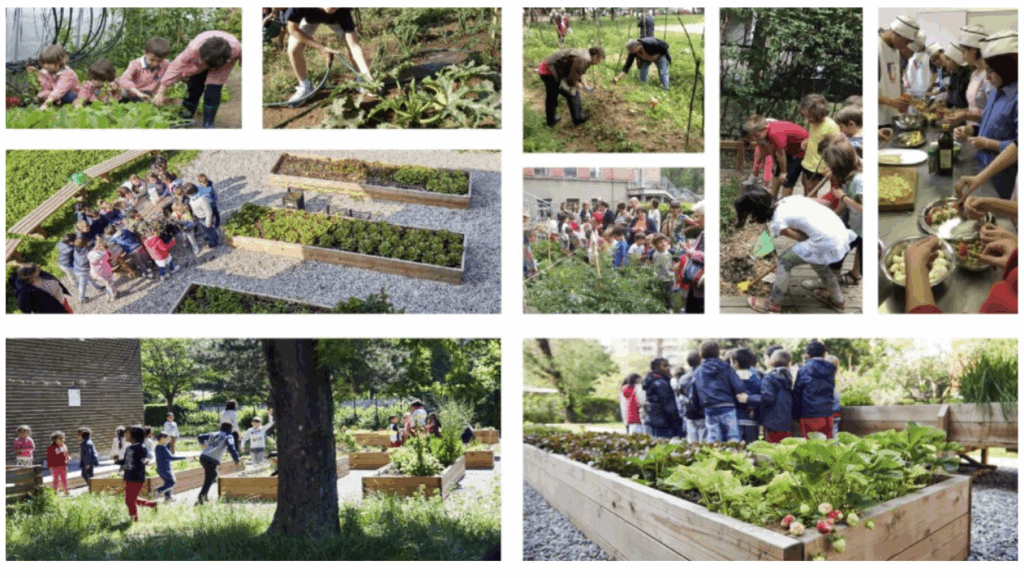
- 107 Educational Gardens: Project promoting sustainability by establishing gardens in city schools, connecting students with the social fabric. While not feasible in every school, thousands of students have been learning about food and agricultural sustainability, forming a generation more conscious and supportive of such practices.
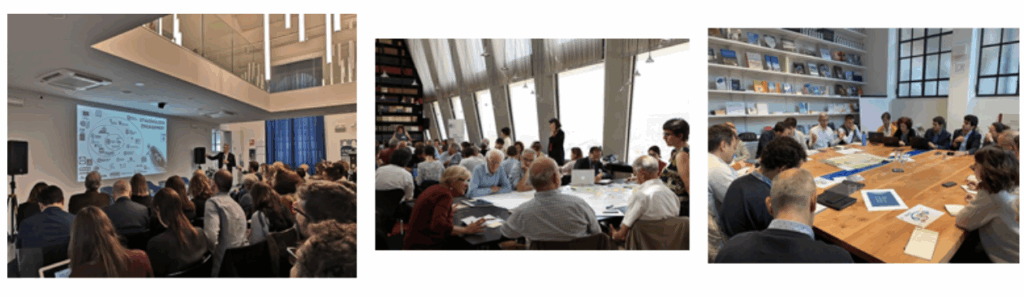
The Urban Food Policy Pact, initially endorsed by 100 global cities, has expanded its reach to over 270 cities across 80 countries, with 621 collected good practices globally. This expansion signifies a significant global impact, fostering the joint development of best practices and creating a multiplier effect of efforts, ultimately influencing millions worldwide.
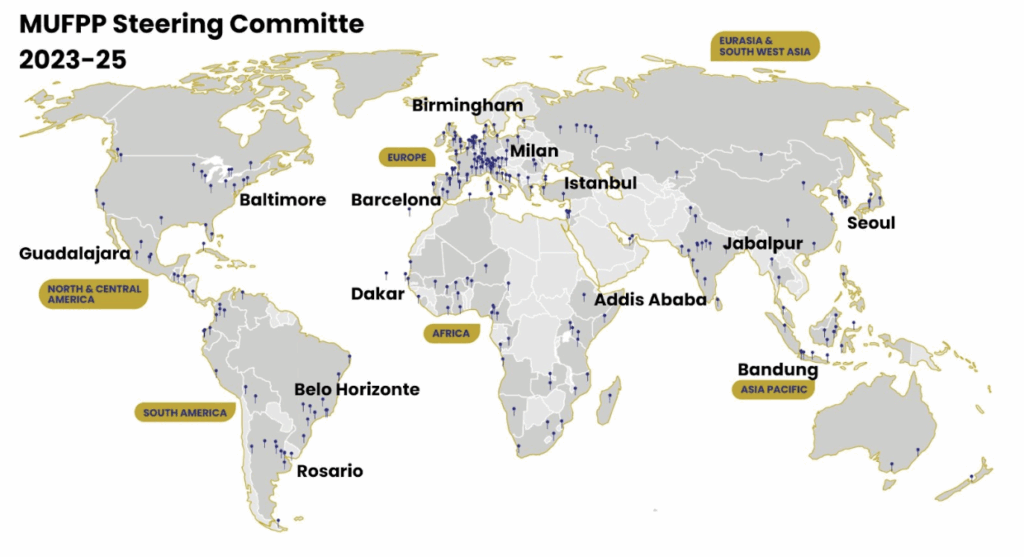
The MUFPP governance is ensured by a Steering Committee with representatives from different regions. Source: Milan Urban Food Policy Pact.
Systems Perspective
The selected case study is chosen for its compelling and significant exploration of food policy’s impact on both local and global scales. This bouncing between local and global dimensions is crucial to consider the needs and requirements of agricultural and food systems, consequently affecting their environmental, social, and economic impacts.
Discussing Food Policy at the city level means addressing food policies that involve the entire city and its stakeholders: universities and businesses, commerce and schools, agriculture and the third sector, public and private entities. The role of municipalities, which is globally growing in importance, is to promote and govern collaborative and participatory processes that allow diverse entities, with different working methods, to find their role, space, and the possibility to make a substantial contribution based on shared objectives. Moreover, cities are the primary launchpad and interlocutors to scale up and organize agricultural and food policies at different levels. For example, Milan’s experience has contributed and continues to participate in the development of a sustainable food law, a sort of food policy for the European Union. Along with other cities from the Milan Urban Food Policy Pact and the Eurocities network, the Municipality of Milan has engaged in in-depth discussions with the European Commission, contributing ideas and insights.
Staying on the local/global dichotomy, the provision of food and water, a fundamental need, is a global issue. Questions about how we will feed ourselves, what food we will consume and produce in the future, and how we will manage inequalities in access to healthy food and uncontaminated water are matters we should address from now on. Additionally, the water crisis for cities represents a dual problem: on one side, we have domestic food consumption and agricultural production, and on the other, water scarcity significantly impacts irrigation systems and reforestation projects, crucial for urban warming and the livability of cities. Therefore, the city level is ideal for monitoring any critical issues and crises in these two systems.
Food policies can also contribute to combating the climate crisis by promoting sustainable agriculture produced and consumed locally, countering global food systems that rely on pesticide-soaked monocultures with long supply chains. In Italy, as in several countries, the food served in public services (such as schools and elderly care facilities) is managed by public or publicly-owned companies. Hence, if the public sector commits to providing predominantly local and plant-based meals in its facilities, the choice impacts a large number of people in terms of health and reducing CO2 emissions. Furthermore, the education and consumption patterns of these foods, especially among the younger generation, can influence the dietary choices of families and future adults, contributing to mobilizing new generations towards more sustainable food choices.
Lastly, since these are complex issues, being part of a network of cities like those in the Milan Urban Food Policy Pact allows us to tackle contemporary and future challenges through shared reflection and institutional leadership that prioritizes the public interest.
Links and Contact Information
Milan Food Policy
Website: https://foodpolicymilano.org/en/objectives-and-priorities/
Facebook: https://www.facebook.com/FoodPolicyMI
Instagram: https://www.instagram.com/foodpolicymi/
YouTube: https://www.youtube.com/channel/UCqyNbPNE295M0iaoGDfsZBg
Food Policy Office email: foodpolicy@comune.milano.it
Vice-mayor and Food Policy deputy’s email: vicesindaco.scavuzzo@comune.milano.it
Milan Urban Food Policy Pact
Website: https://www.milanurbanfoodpolicypact.org/
Facebook: https://www.facebook.com/mufpp/
YouTube: https://www.youtube.com/channel/UC7BYQUg78RwG26Gg3yrfDvQ/featured
Secretariat email: MUFPP.Secretariat@comune.milano.it