Main Theme
Sub-theme: Water tech, water management, water efficiency, commercial toilets
Abstract
Many areas of the world are already facing water shortages and public health crises due to climate change and population growth, and it is necessary to reform the world’s current use of water in order to combat the damage this will cause.
Flushing accounts for 25% of the annual water consumption in an average household, and 43% in offices. A standard toilet’s flush volume is between 6 and 11 liters, which equates to 143 billion liters of clean, drinkable water wasted every day.
An innovative solution to the problem is proposed by Propelair – one of the world’s lowest flush toilets. Their patented pressure assisted water displacement system uses only 1.5 liters of water per flush resulting in an 84% reduction in water use compared to the standard toilet. The product also saves energy and carbon. The flush system is closed lid, and uses a sterilizing material on the latch, which leads to a significant sanitary improvement.
The company’s B2B business model guarantees high environmental impact of their products, which are still not suitable for households due to high costs. Their clients include universities, councils, and large corporations. The mission of the company is to fight the global water crisis, and their efforts to do so have thus far included expansions into water stressed areas such as the Gulf countries and South Africa, where they partnered not only with corporate clients, but also with other innovators in sanitation technology, that aim to bring hygienic and sustainable toilets to rural communities.
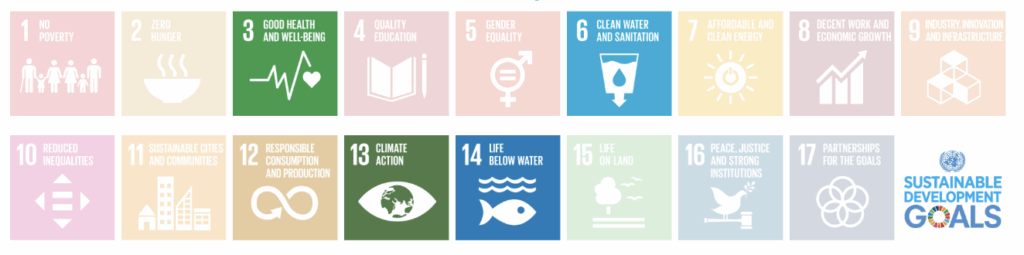
Sustainable Development Goals Chart
Main Highlights
- At least 25% of the world’s population don’t have access to a toilet at home, and 10% lack access to clean water.
- Climate change will result in the majority of the world’s population experiencing water shortages.
- Modern toilets use up to 11 liters of clean water per flush, accounting for 25% of annual water consumption per household. EU and US regulations suggest toilets to have a 6 liter maximum flush volume, but the regulations remain voluntary and are hardly met.
- Propelair is the UK’s leading inventor in pressure assisted toilets, and ‘’the world’s lowest flush toilet’’. The company has refined their patented ‘’displaced water’’ technology over 20 years, and their toilets use only 1.5 liters of water per flush.
- Garry Moore, the founder of Propelair, came up with the idea to use vacuum and compressed air to push waste through the toilet using 80% less water than the standard single flush toilet.
- Propelair aims to be more hygienic than the common toilet, and uses principles such as closed lid flush and antimicrobial materials (Steritouch latch) to design products that will fight the spread of dangerous pathogens, including coronavirus. The latch, in combination with the powerful flushing system, eliminates up to 99.9% water contaminants.
- The company’s client base includes several British universities and councils, large companies such as Shell and McDonald’s, as well as camping sites, ships and yachts.
- Propelair place an emphasis on sustainability, and their first expansions into international markets include ventures in the water-stressed markets in Gulf countries and South Africa, including rural communities.
- The advantages of Propelair for their clients include savings on water and sewage bills, as well as meeting current and future environmental demands for water, energy and carbon savings.
- According to standards for ‘’the reinvented toilet’’ set out by the Bill and Melinda Gates foundation, Propelair toilets are a sustainable solution and their widespread use would benefit society and the environment.
Case Overview
The invention of the modern flushable toilet dates back to the Elizabethan court in England, in the late 16th century. While it started as a luxury for the aristocrats, today it is a privilege that people in developed countries take for granted. 1 in 4 people globally still don’t have access to a toilet at home, and 1 in 10 lack access to clean water. Due to climate change, it is projected that by 2025, 50% of the world’s population will live in water-stressed areas, with low income communities being the most heavily impacted. As drought has been dubbed ‘’the next pandemic’’, and even countries with a moderate climate such as the UK are projected to face water shortages in the next 25 years, the world will need to reduce and reimagine its water consumption in order to survive it.
While developing countries are known to struggle to access water and sanitation, water security is a challenge for developed countries too. Flushing accounts for a quarter of annual water consumption in European and American households, and a half of water consumption in commercial buildings. A single flush uses up to 11 liters of clean water, and 60-100 liters of water per person flushed every day. Globally, this equates to 143 billion liters of clean, drinkable water being wasted globally every day. In addition, this increases the planet’s carbon footprint, as the constant flow of water in and out of buildings generates about 10.5kg of carbon per liter.
With water priced at 2$ per 1000 gallons (3750 liters), it was estimated that the US citizens flush 5 billion dollars every year. Maximum flush volume was limited to 6 liters in the US in 1992, while the EU have introduced guidelines in 2013, according to which ‘Eco-labeled’ toilets will not exceed 6 liters of flush volume. However, as the guidelines are voluntary, many older toilets remain with far higher flush volumes.
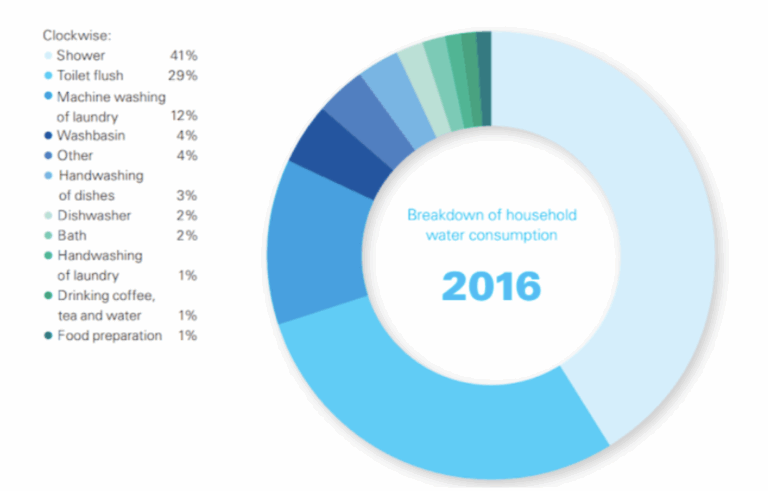
Image: Flushing accounts for over a quarter of household water consumption
Flushing toilets can be broadly grouped into single flush (gravity-assisted flush using high amounts of water), dual flush (with separate buttons or levers for liquid and solid waste), and pressure assist toilets (where water flow is aided by pressurized air). Dual flush toilets are common in households, but they are considered to waste more water than they save, due to misuse or poor design leading to leaks. Pressure assisted toilets can save a significant amount of water, with some of them using only 1.5 liter of water per flush, but they are most commonly found in hotels, offices and other commercial premises but due to a significantly higher price compared to traditional models.
In the UK, Propelair are the leading innovators in pressure assisted toilets, and globally, they are one of the world’s lowest flush toilets. They have been developing their technology, and their B2B sales model, for over 20 years. Garry Moore, the founder of Propelair, was inspired by toilets in trains and airplanes and came up with the idea to help reduce the amount of water wasted (the average flush volume in the UK is 9 liters) to dispose of such a small amount of waste. Airplane toilets use vacuum to pull waste. Optimized for buildings, the Propelair idea creates a vacuum and uses water to push waste instead.
While the common single flush toilet uses gravity-assisted water flow in order to push waste through drainage pipes, Propelair toilets use vacuum and compressed air (“displaced air” technology). After shutting the lid, a vacuum is created that aids the water to push waste through the system. It contains two cisterns, for air and water, which reduces the required amount of water by 80%. Propelair promises its customers monetary, energy and carbon savings. Even though the mechanism uses electricity to power a control module for the air and water pumps, less energy and carbon are required for water delivery, downstream water and waste processing.
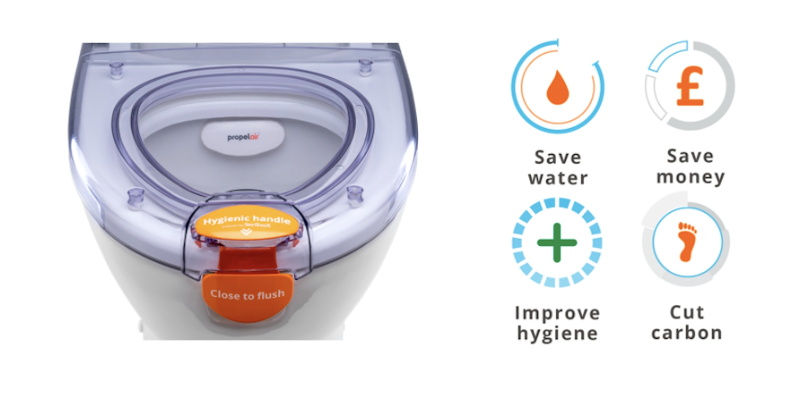
Image: Propelair toilets save water, money and carbon.
Since its founding, Propelair has developed both its technology and its customer base. Especially after COVID, the company drew attention to the role of the toilet in public health: flushing a toilet with the lid open creates a cloud of aerosol particles that can linger in the air for a long time, and contain various contagious pathogens, including the coronavirus. Propelair toilets address this problem by having a closed lid mechanism, antimicrobial handles, and a powerful flush that removes 99.9% of bacteria from the toilet bowl.
The company was successful in attracting investors’ attention, and was most notably awarded the Horizon 2020 EU research and innovation grant in 2017. Under the propositions of the grant, Propelair products have thus far been tested in a pilot study at the University of Exeter, where it was demonstrated that the toilets are safe to use and lead to significant water use and cost reduction. Additionally, this study has calculated that the annual energy and carbon savings amount to 80%.
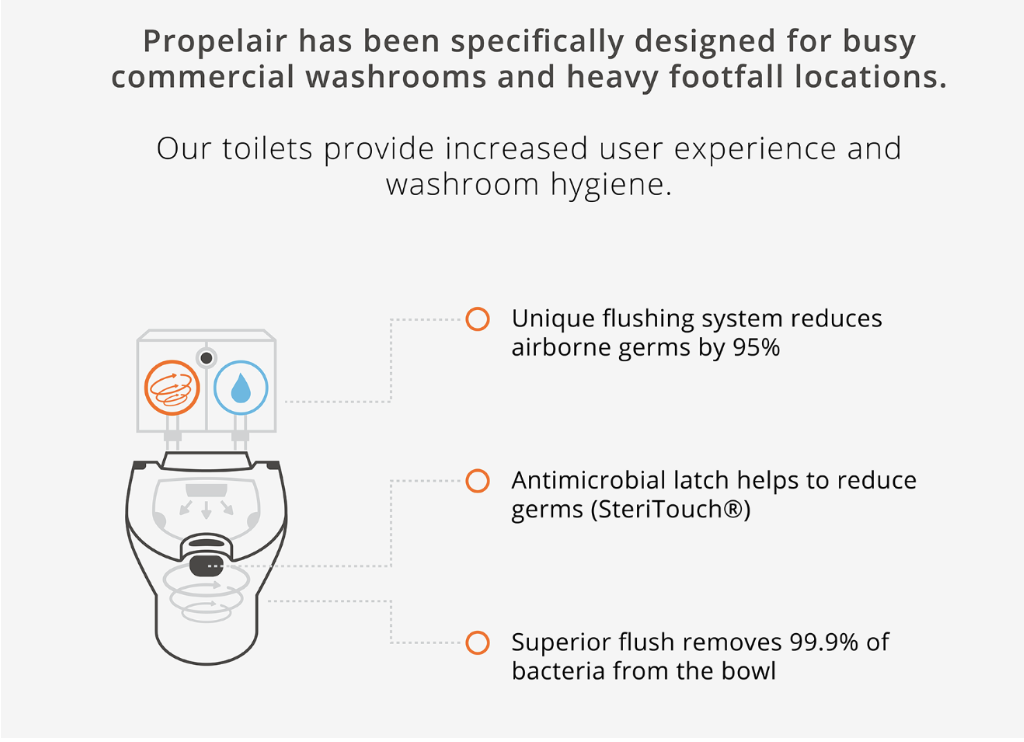
Image: Propelair is designed to be more hygienic than the common toilet.
The company’s clients are commercial, ranging from universities and cultural institutions, to Shell, McDonald’s and the Royal Air Force. Targeting commercial customers ensures a higher impact of their innovation, as the cost of installation is still higher than is affordable for an average household (estimated from pressure assisted toilet installation costs). Beyond office buildings, Propelair are also present on camping sites as well as ships and yachts.
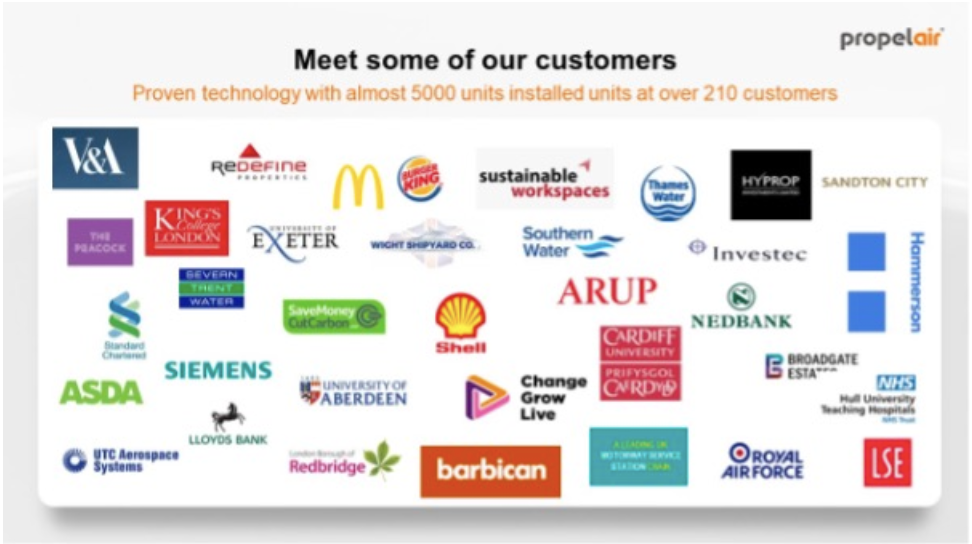
Image: Propelair has a broad commercial customer base.
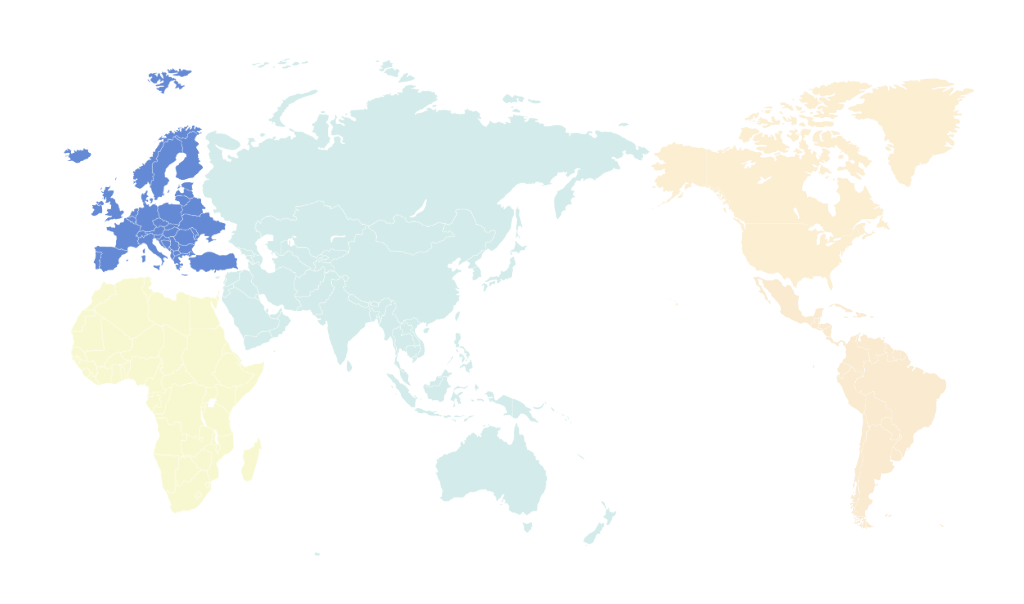
Now led by the former Dyson MD David Hollander, Propelair has grown its sales pipeline more than 20 times since 2019. Their specialization remains commercial toilets, and the CEO explained to Business Weekly that they aim to reach sites with 40-plus flushes a day, locations with social and environment targets, or those relating to hygiene and/or queue reduction. In particular, they recently launched in developing and water-stressed markets, such as South Africa, the Gulf countries, and Hong Kong. In the future, they aim to expand to Australia, where droughts increasingly threaten water security on the continent.
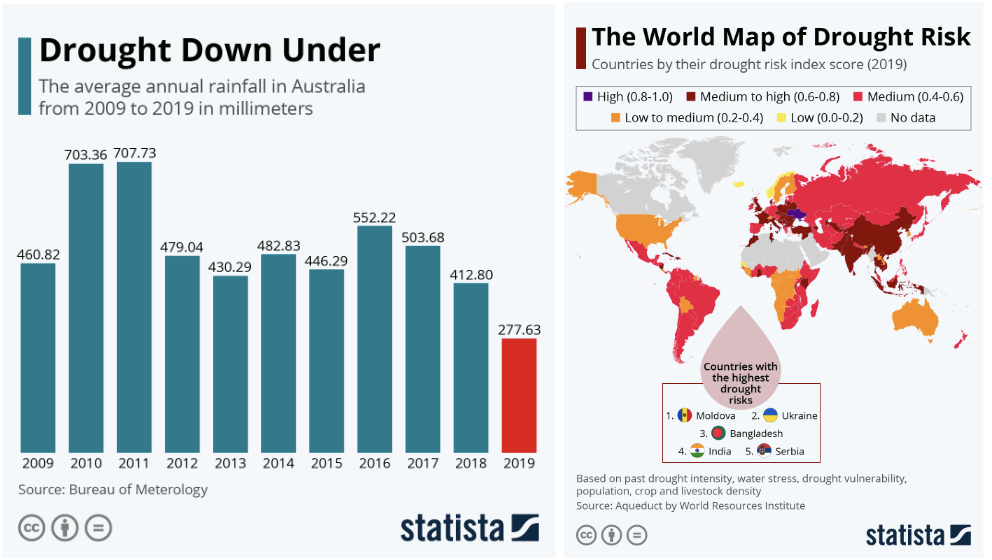
Images: Propelair plan to expand into more water-stressed countries.
Impact Statement
In 2022, Propelair have expanded their factory capacity to produce up to 6000 toilets a year. Each of their toilets is projected to save more than 150,000 liters of water annually. They have over 200 commercial clients, including theaters, hospitals, shopping centers, universities, offices, fast food chains and retailers. The main appeal to businesses is clear: using Propelair results in significant savings. Direct savings come from the potential to save up to 60% on water and sewerage bills, as well as being able to claim 100% of the cost through the UK government’s Enhanced Capital Allowance scheme for water-efficient products. Other important savings include reductions in energy use (80%), carbon footprint (80%), water use (84%), and contaminants (99.9%). As the system can be retrofitted to existing plumbing, the decisions for businesses to make the switch is made even easier.
A part of Propelair’s appeal to commercial clients comes from businesses proactively responding to environmental requirements aimed to reduce water consumption. The first one of these new government measures in the UK, for example, will require businesses to add water-efficiency labels to toilets and other appliances by 2025. The Australian government introduced a similar scheme in 2005, and it is projected that it will result in 20% water savings over 25 years, as consumers become better informed about their water consumption and the efficiency of the appliances that they are using.
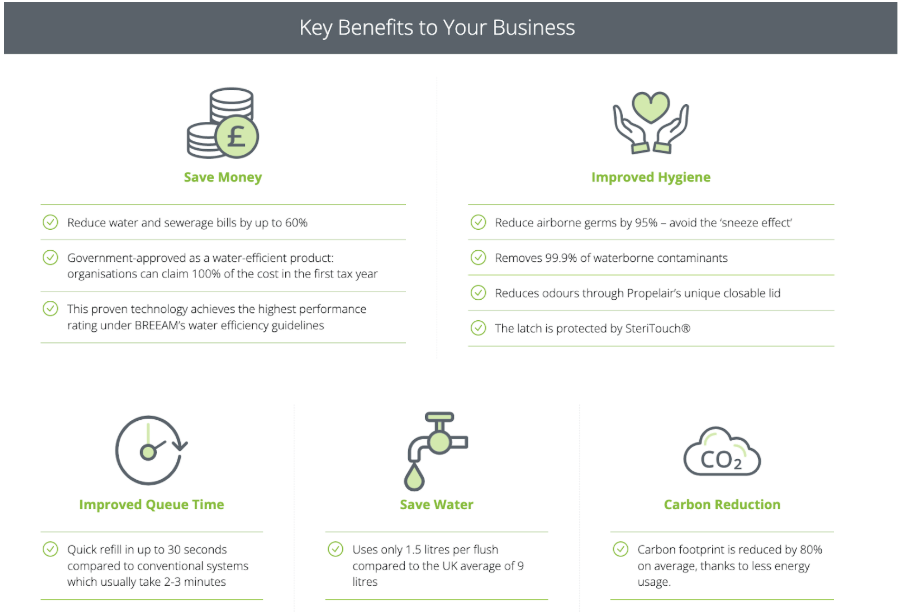
Image: Why businesses choose Propelair
The safety and efficacy of Propelair products has been demonstrated to a rigorous scientific standard due to their research collaborations with universities and participation in Horizon 2020 funded research. These partnerships can further propel Propelair’s R&D. Because of the consistent flow of clients, funding and research, it will be possible for the company to keep developing their products to be compatible with a wide variety of environments.
Propelair toilets have first been used in rural conditions on modern UK camping sites that use waste tanks. Having successfully demonstrated their outdoors compatibility, they have established a partnership with the South African company Amalooloo, that installs sanitation systems with waste in a variety of settings, including village schools. Particularly in places that either lack access to sanitation, or are prone to droughts, using an ultra low-flush system like Propelair will improve hygienic conditions and public health.
Systems Perspective
When the Bill and Melinda Gates Foundation established the Reinvent the Toilet Challenge in 2011, the goalposts for the reinvention of the toilet were:
- Remove pathogens from human waste
- Recover resources (energy, water, nutrients)
- Operate off grid, without connection to sewers
- Use minimal electricity
- Cost less than 0.05USD per day
- Promote sustainable and profitable sanitation services
- Promote businesses in poor urban settings
- Appeal to both developed and developing nations
No single toilet in the present time reaches all of these goalposts. Propelair brand themselves as ‘’the toilet, reinvented’’, with their primary domains of reinvention being the ultra-low flushing system (that reduces water use 5-fold compared to a standard toilet), and their sanitary flushing system and latch material.
Their partnerships in developing countries promote local businesses and sanitation services. Their system works off grid, powered by a battery that uses minimal electricity.
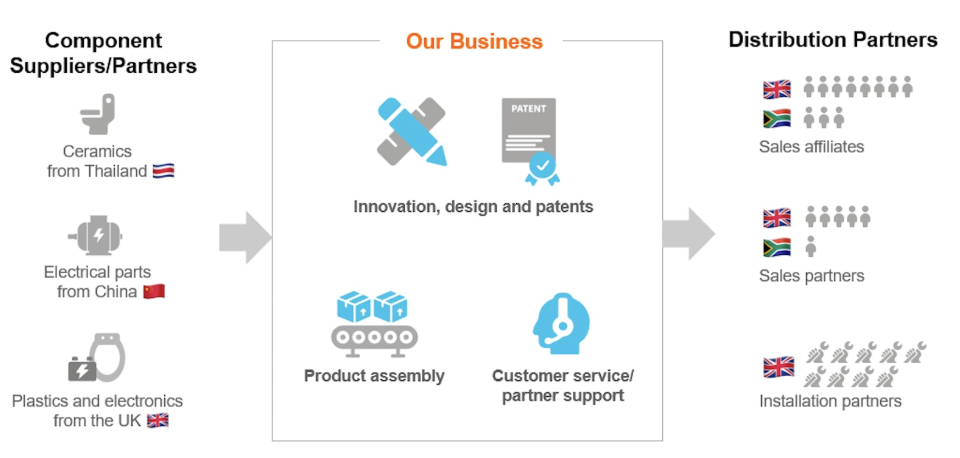
Image: Propelair’s business model
Due to costs (the base price of one unit is £675/$771 plus VAT), Propelair is still not ideally suited for household use, neither in developed countries (where the most popular solutions are dual flush or composting toilets), nor in developing nations, where more low-tech solutions such as bamboo outhouses and composting have become popular. Promisingly, Propelair founder Garry Moore has recently endeavored into adapting the low flush toilet for household use, in his new project Velocity.
While Propelair brings a solution that reaches several of the sustainability goalposts set out in the ‘Reinvent the Toilet Challenge’, they would be more in line with global sustainability goals if their products were powered by renewable energy sources, and if they were produced from sustainable, responsibly sourced materials. Propelair are currently powered by a 12V battery that uses very little energy (200 000 flushes per battery). The seats are made out of ABS plastic, which is not biodegradable, but is considered fully recyclable. Their ceramics and electrical parts are sourced from Thailand and China, which involves transport related emissions and may involve social justice issues due to poorer working conditions to reduce costs.
Finally, the reinvented toilet of the future must be situated in a reimagined washroom. The modern washroom is rife with unsustainable luxuries, and it needs to be reformed to include renewable heating sources, use of greywater, durable plumbing that prevents water loss from dripping taps, reducing the use of paper and non-recyclable sanitary products and replacing them with sanitary alternatives, and restricting the use cosmetic products with harmful ingredients.
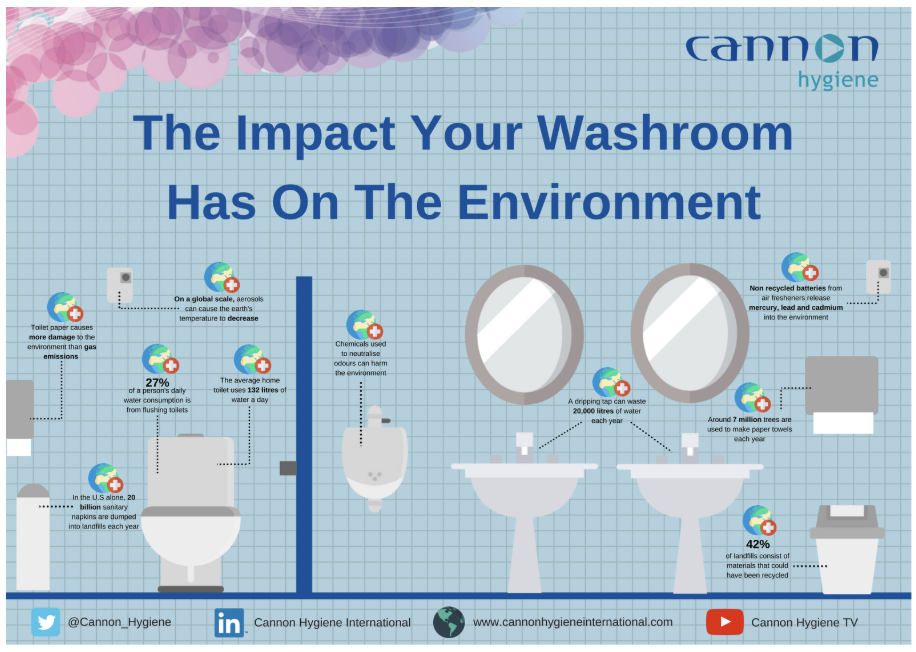
Image: Modern bathroom habits have a multifaceted impact on the environment
Links and Contact Information
Company website: https://propelair.com/
Contact details: info@propelair.com
CEO LinkedIn: David Hollander
Propelair Social Media Links:
Propelair | LinkedIn | Propelair
Propelair | Facebook | @OneFlushAtATime
Propelair | Twitter| @propelair
4Revs Researcher Milena Marinkovic | October 2022